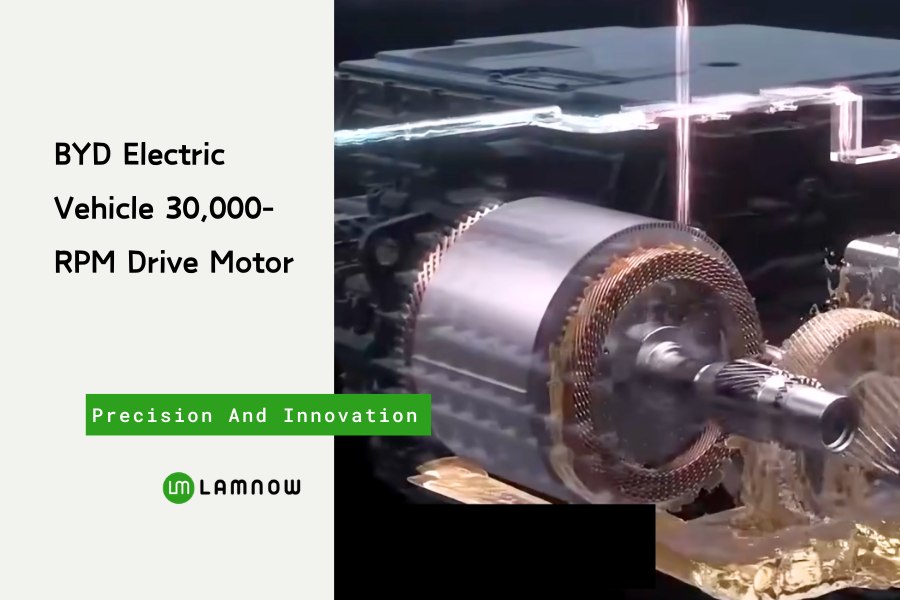
Why BYD Electric Vehicle 30,000-RPM Drive Motor? To outsiders, 30,511 rpm may sound like a marketing gimmick. For powertrain engineers, it is a strategic inflection point that reshapes three core pillars: peak performance, system efficiency, and cost competitiveness.
| technical dimension | core breakthrough | Industry comparison |
| RPM | 30,511 rpm (highest in mass production worldwide) | Outperforms Lucid (21,000rpm) by 53%. |
| Power density | 16.4kW/kg | Exceeds Tesla Model S Plaid (8kW/kg) by 105% |
| Volume/weight | Volume reduced by 30%, weight reduced by 25% | With the same power output, its volume is only 70% of that of its competitors. |
| Equipped with models | Han L EV (0-100 km/h acceleration in 2.7 seconds), Tang L | Top speed exceeds 300km/h |
Why Almost No One Can Hit 30,000 RPM?
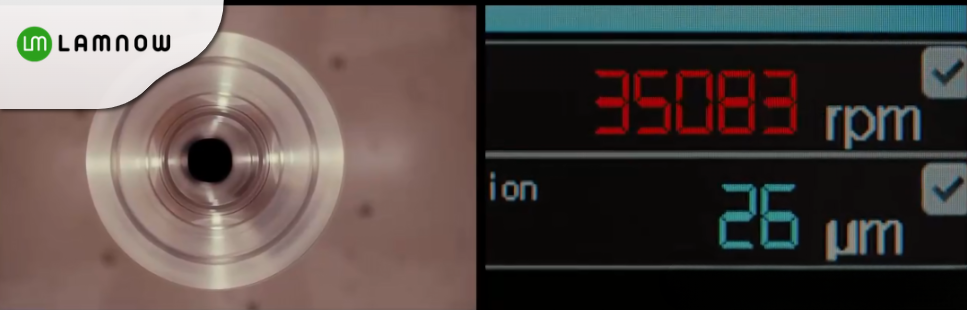
Spinning a motor 30,000 times per minute creates extreme conditions:
• Centrifugal acceleration at the rotor outer edge exceeds 40,000 g
• Iron and eddy-current losses skyrocket
• Magnetic steel risks demagnetization
• Bearings and gears face catastrophic wear
• Vibration and noise become unmanageable
Most automakers hit a wall near 20,000–25,000 rpm. BYD’s breakthrough required re-engineering stator, rotor, electromagnetic design, gears, bearings, and cooling from first principles.
BYD Motor Stator Optimization
The stator generates the rotating magnetic field. At 30,000 rpm, hysteresis and eddy-current losses (iron loss) become dominant heat sources. BYD’s solutions are elegant and brutal.
Stator Core Material – Ultra-Thin 0.2 mm Silicon Steel
BYD uses 0.2 mm-thick laminations, thinner than the industry standard 0.25–0.30 mm. Thinner sheets break up eddy-current paths, drastically reducing high-frequency iron loss. This is foundational for sustained high-RPM operation without overheating.
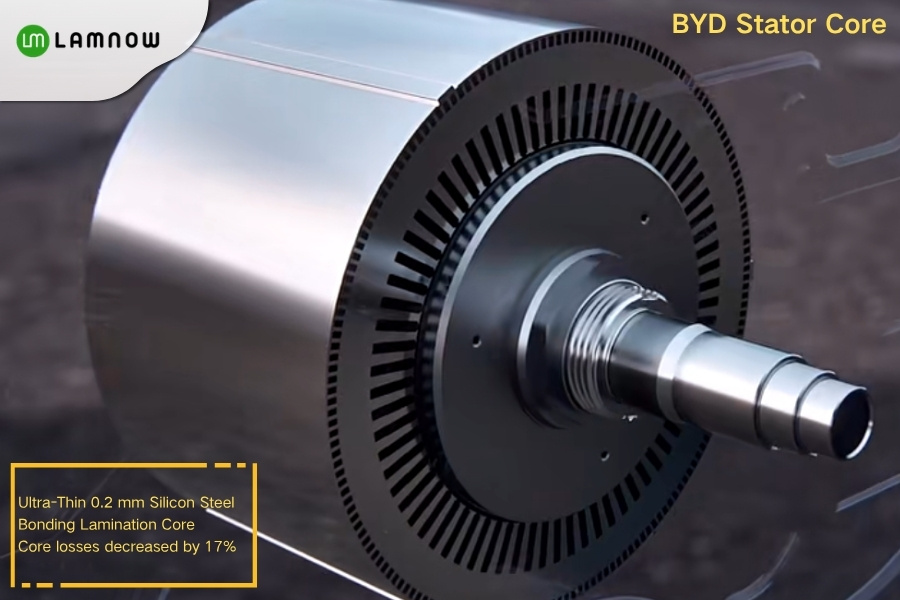
Bonded Core Technology (Replacing Rivets/Welding)
Traditional riveting or welding creates magnetic short circuits, stress concentrations, and vibration. BYD switched to special adhesive bonding:
• Axial stiffness up 161% vs. riveted cores
• Dramatically improved NVH
• Elimination of local loss hotspots
The core becomes a single, rigid block—critical to surviving 30,000 rpm without deformation.
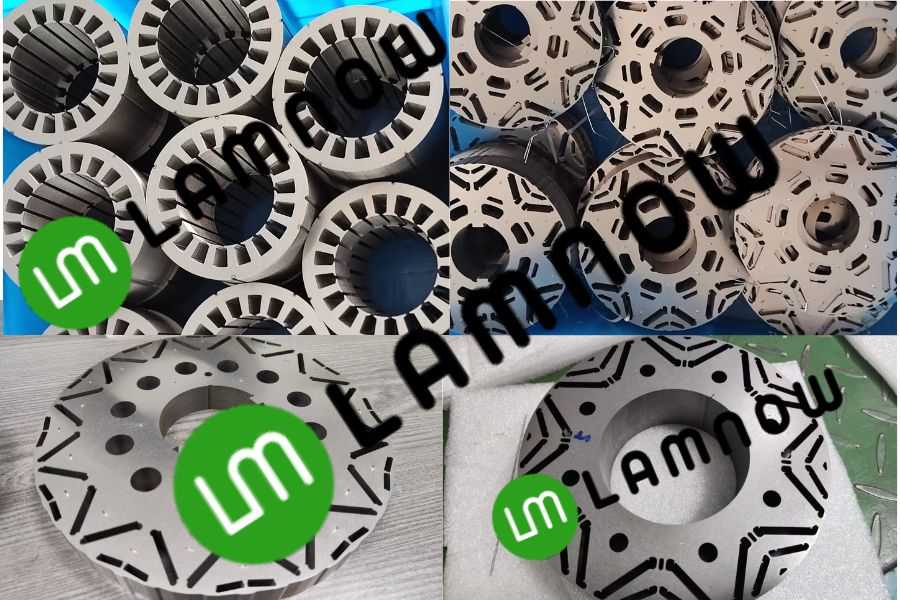
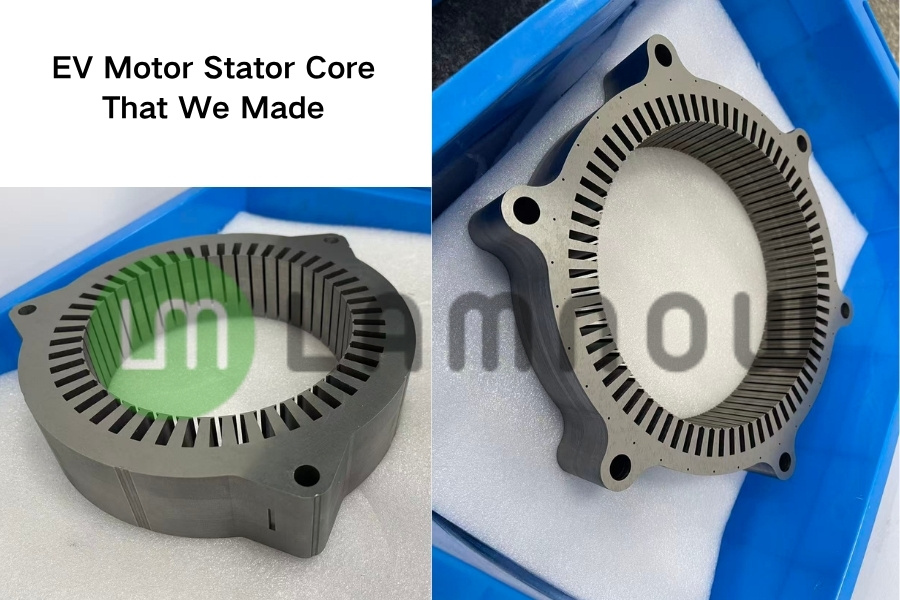
0.2mm EV stator Core with bonding that we made
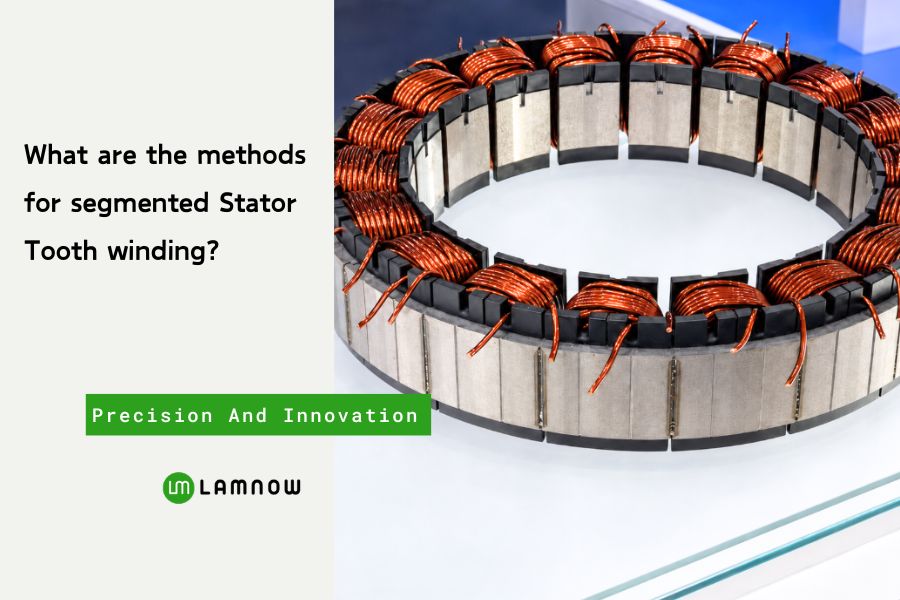
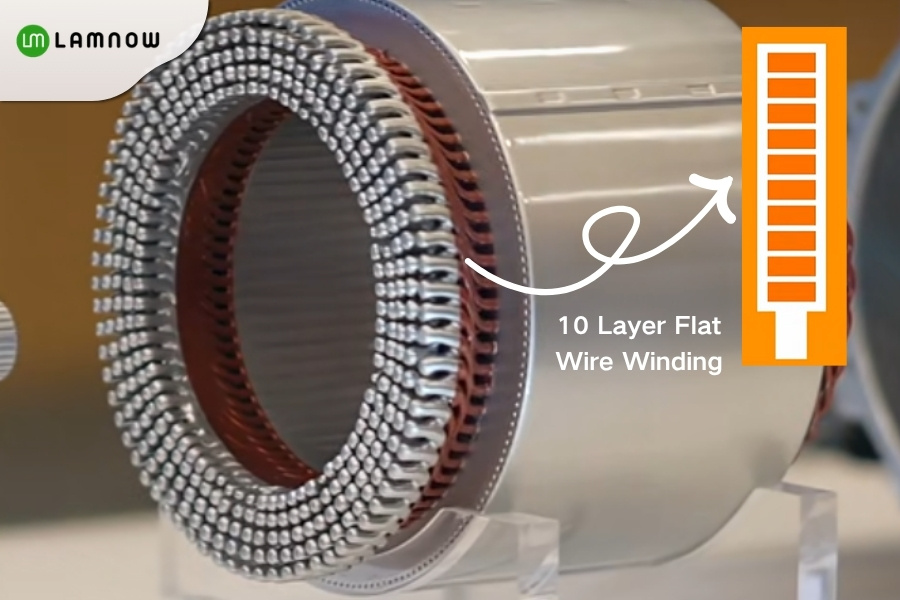
10-Layer Flat-Wire Winding
BYD implemented a 10-layer flat-wire stator winding.
Winding Insulation Method
BYD’s proprietary winding enamel film exhibits a 41% lower dielectric constant compared to conventional enamel films. The Partial Discharge Inception Voltage (PDIV) has been increased by 13%, the breakdown voltage by 8%, and the film thickness reduced by 15%. This has completely resolved the technical challenges associated with insulating stator copper windings within 1000V high-voltage platforms.
Compared to round wire:
• Higher slot fill = more copper in the same space
• Lower resistance = 57% lower copper loss
• Shorter end turns = less stray loss and easier cooling
Flat wire also boosts peak power by roughly 11%, directly improving acceleration and sustained speed.
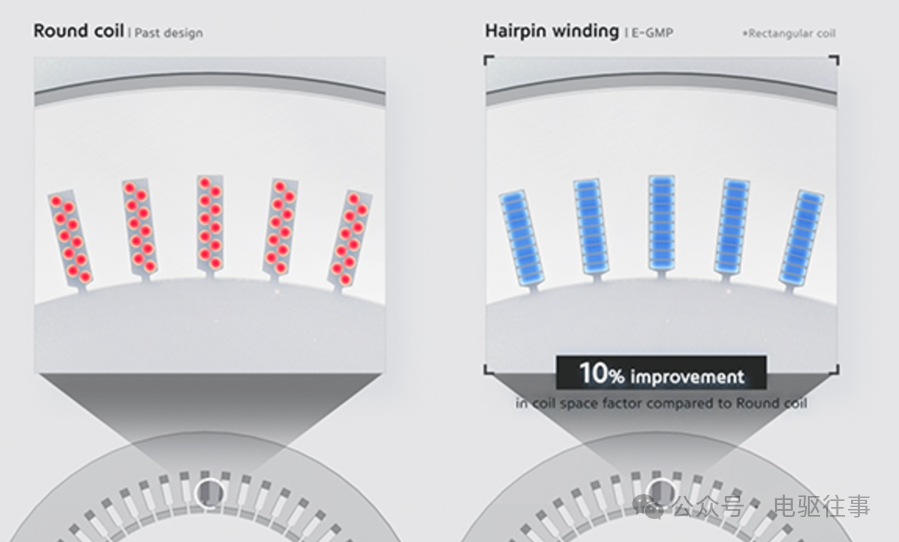
Together, these stator changes slosh high-frequency loss, lower heat, and lift power density—without increasing size.
BYD Motor Rotor Revolution
The rotor is the most stressed component. At 30,000 rpm, even a minor flaw causes catastrophic failure. BYD rebuilt the rotor around strength, magnet retention, precision balance, and heat control.
Rotor Core – 1,000 MPa High-Strength Silicon Steel
Standard rotor steel yields around 450 MPa—insufficient at 30,000 rpm. BYD upgraded to 1,000 MPa ultra-high-strength steel, more than doubling yield strength. This prevents plastic deformation under extreme centrifugal load.
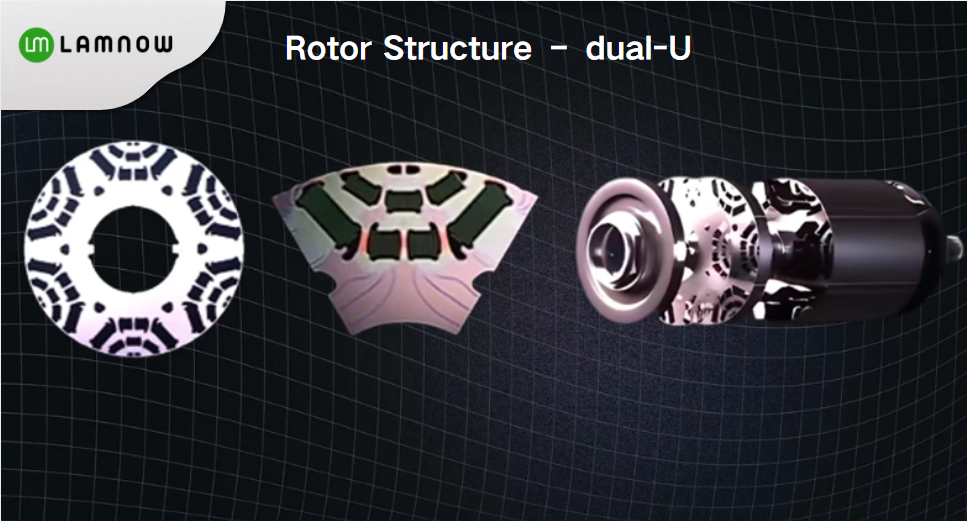
Rotor Structure – dual-U
The rotor employs a dual-U topology design, which offers another significant advantage:
it provides a larger available surface area for the placement of magnets, thereby allowing for an increased magnet count. Specifically, the number of magnets per pole has been increased from four to seven.
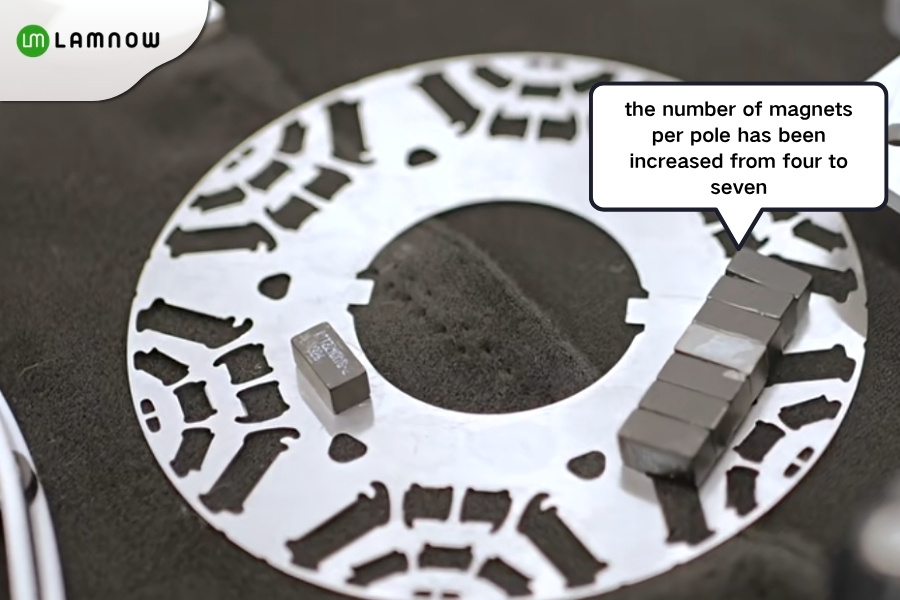
By optimizing the magnetic field distribution, the magnetic flux concentration effect has been significantly enhanced, effectively channeling external stray fields inward. This process boosts the rotor’s magnetic field strength, ultimately resulting in a 15% increase in motor power output.
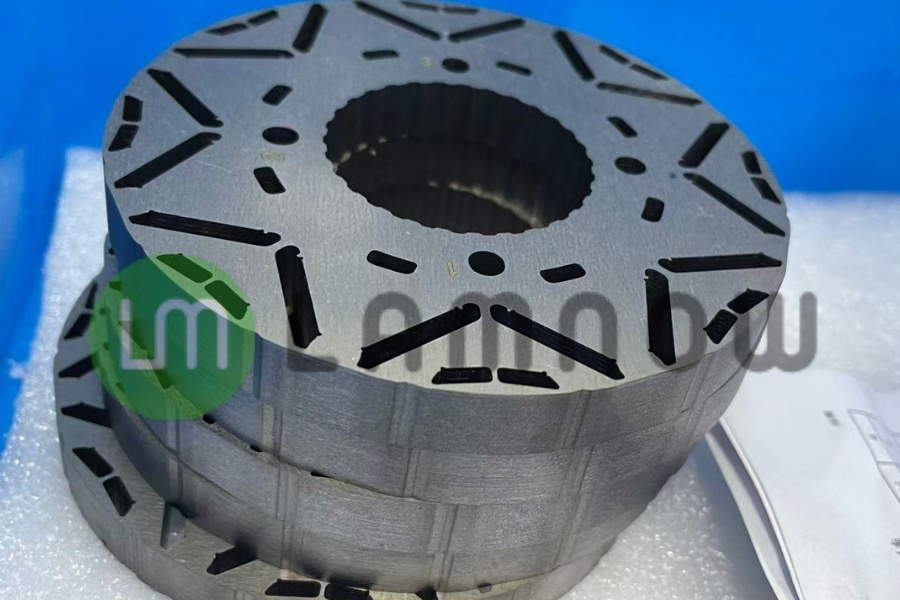
EV Rotor Core with dual-U that we made
N50EH High-Performance Magnets
Moving beyond standard N48H, BYD uses N50EH grade magnets:
• Magnetic performance +18%
• Stable at much higher temperatures
• Lower eddy-current loss via optimized magnetic circuits
Combined with electromagnetic shaping, rotor eddy-current loss drops by 44%—critical for sustained high-power operation.
As previously noted, the utilization of high-performance N50EH permanent magnets serves as the foundational element. Building upon this, BYD optimized the magnetic circuit design to boost the stator magnetic field’s saturation flux density from the conventional 1.9 T to 2.1 T, while also incorporating an ultra-wide air gap design.
A higher flux density translates to the generation of greater torque within an equivalent volume. Concurrently, through electromagnetic reconfiguration, the distortion rate and harmonic content of the magnetic field were reduced; this not only minimized torque ripple and enhanced operational smoothness but also—at the source—mitigated the additional losses induced by harmonics.
Gearbox & Bearing
Gears: ISO 4-Class Precision
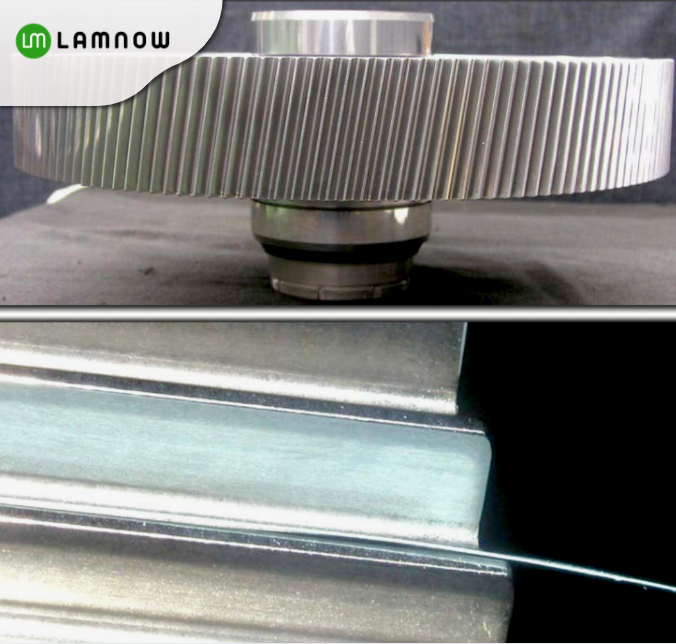
• Accuracy ISO Grade 4 or higher
• Super-finished ground tooth surfaces
• High-grade carburized alloy steel (e.g., 17CrNiMo6)
• Precise profile and lead modification to compensate for deformation under load
• High-pressure jet lubrication
BYD claims peak transmission efficiency up to 97.6%—near-perfect energy transfer.
Bearings
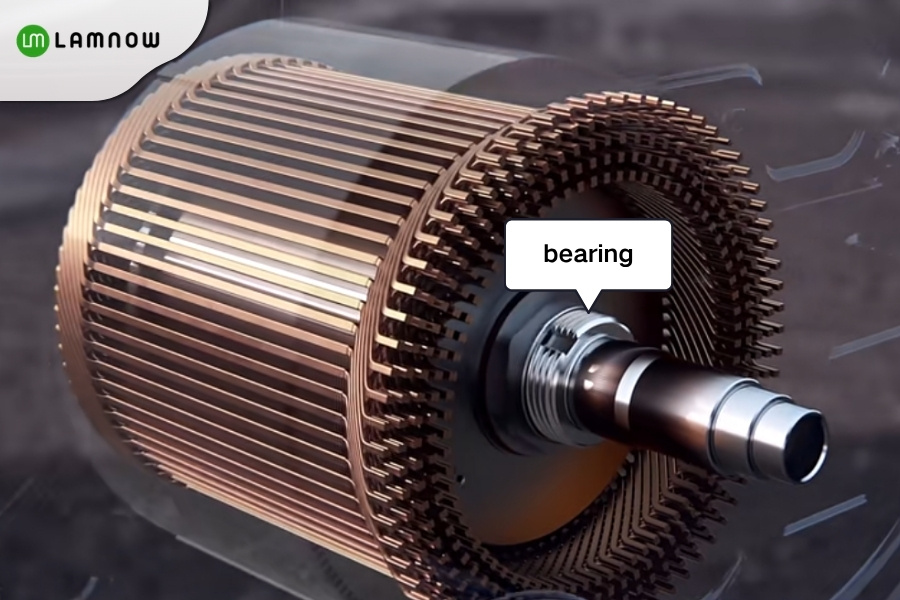
Standard steel bearings fail quickly at 30,000 rpm. BYD uses ceramic ball bearings paired with graphene nano grease:
• Friction coefficient -50%
• Service life ×3 longer
Low-viscosity lubricant further reduces churning loss. The result: reliable, low-friction rotation for years—not just test benches.
Cooling & Thermal Management
Heat is the ultimate limiting factor for high-RPM motors. BYD uses a comprehensive thermal system combining:
• Direct oil cooling of stator and rotor
• Water cooling for the inverter and housing
• Refrigerant cooling integrated with the vehicle HVAC
This keeps temperatures stable even during repeated hard acceleration and high-speed cruising. Paired with 1500V SiC modules, the entire powertrain runs efficiently at extreme load.
BYD’s 30,000-rpm electric drive is not just an engineering victory—it’s a strategic masterstroke. By turning the “RPM limit” upside down, BYD has redefined what a production EV can do.
The age of the ultra-high-speed EV drive is here. And it’s not coming; it’s already arrived.
Lamnow- High-Performance EV Motor Lamination China Manufacturer
As a leading manufacturer of new energy motor cores in China, Lamnow helps optimize stator and rotor structures, reduce air gaps, and improve efficiency. Instead of looking up at the ceiling, let’s break through it together!