How do different permanent magnet structures affect motor performance and applications? This article explains the main types of permanent magnet synchronous motor, focusing on motor structures, operating characteristics, and typical industrial applications.
Surface-Mounted Permanent Magnet Synchronous Motor
Structure
In surface-mounted PMSMs, the rotor magnetic poles are usually arc-shaped segments and are fixed to the surface of the rotor core using special adhesive.
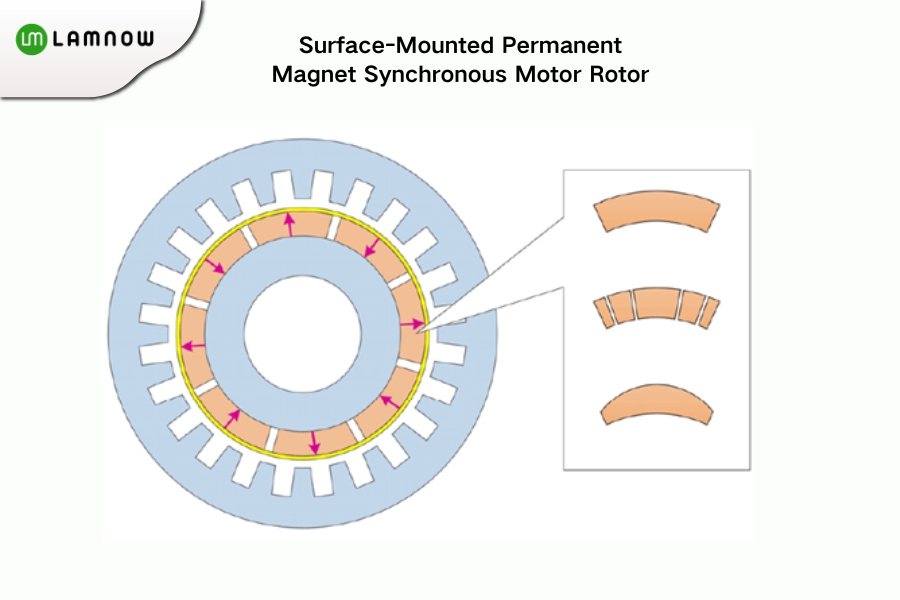
To prevent the magnets from being thrown off by centrifugal force during rotation, the outer surface of the magnets is typically wrapped with a non-magnetic sleeve or fiberglass tape as a protective layer.
This rotor structure features a simple design, low manufacturing cost, easy assembly, and small rotational inertia, making it widely used in practical engineering applications.
However, in this structure, the permanent magnets are directly adjacent to the air gap. On one hand, the magnetic permeability of the permanent magnet is close to that of air, which effectively increases the air-gap length. On the other hand, the magnetic field generated by the magnets directly affects the air-gap field, making motor performance highly sensitive to the characteristics of the permanent magnets.
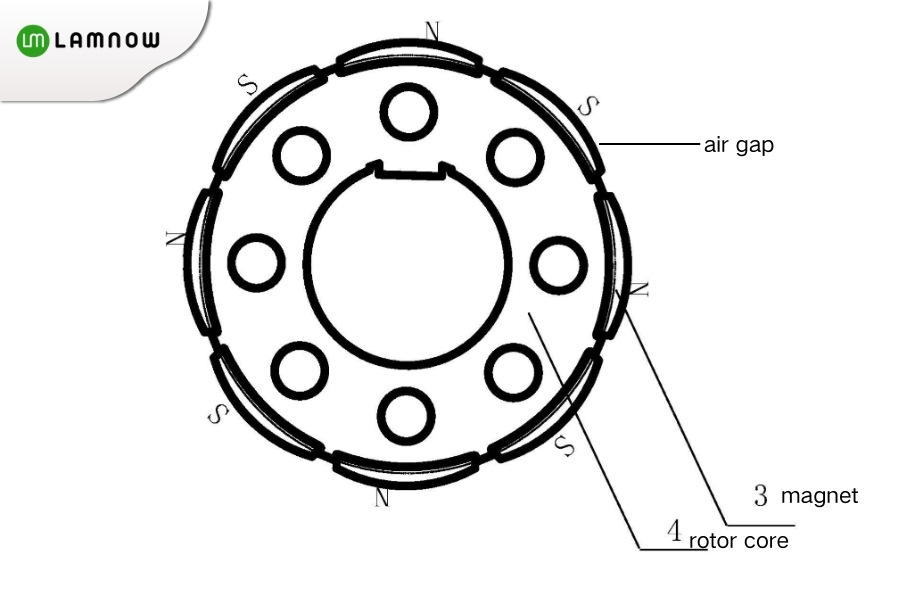
Therefore, to improve the external magnetic characteristics and obtain a more sinusoidal air-gap magnetic field, optimization methods such as segmented magnets and unequal-thickness magnets are often applied.
Application
In addition, due to its relatively low torque ripple, stable operation, simple structure, and ease of maintenance, surface-mounted PMSMs are more widely used in marine propulsion systems.
Interior-Mounted (Embedded) Permanent Magnet Synchronous Motor
Structure
The rotor structure of an interior-mounted PMSM. Although it appears similar to the surface-mounted structure, the motor performance differs significantly.
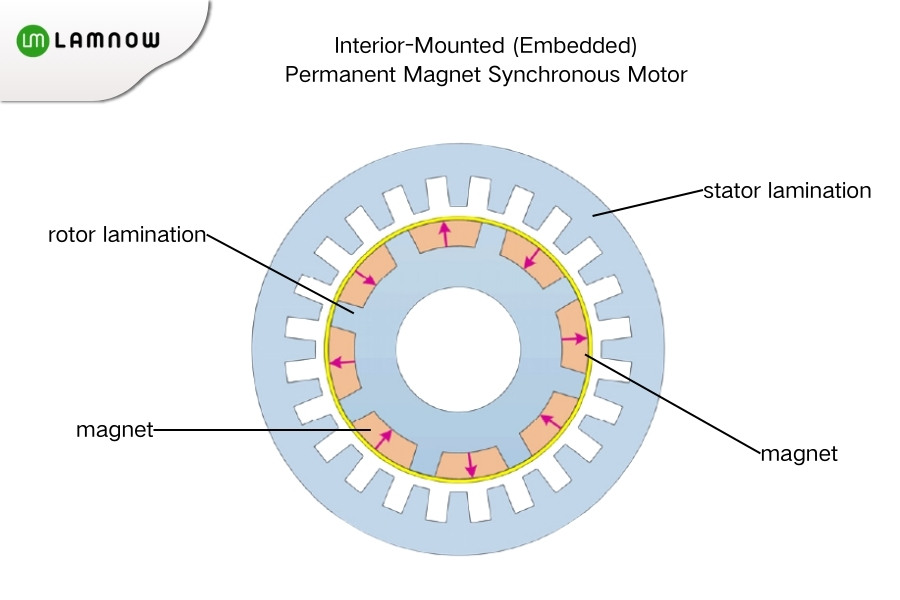
In surface-mounted PMSMs, the inductance remains nearly constant at any rotor position, and the motor produces only permanent magnet torque.
In contrast, interior-mounted PMSMs have rotor iron salient poles between magnets, causing the stator inductance to vary with rotor position. As a result, the motor produces both permanent magnet torque and reluctance torque.
The former is equivalent to a traditional non-salient-pole motor, while the latter corresponds to a salient-pole motor.
Application
In the field of new energy vehicles, especially electric vehicles and hybrid electric vehicles, interior-mounted PMSMs are widely adopted due to their high efficiency and high power density, providing strong and efficient propulsion.
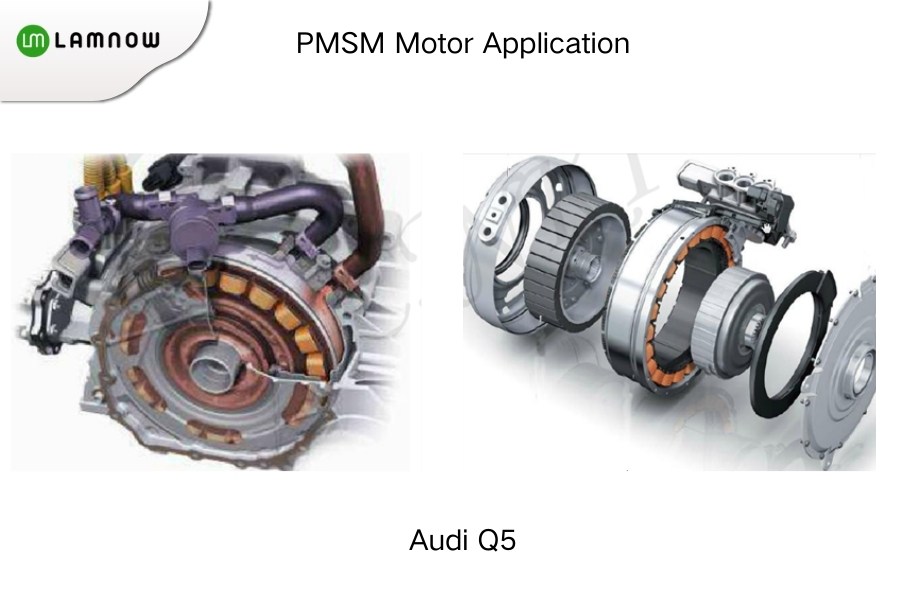
The Audi Q5, one of the latest plug-in hybrid electric SUVs, is among the best-performing electric SUVs currently available. It is equipped with a PMSM rated at 40 kW (2300 rpm), with a maximum torque of 211 Nm and a specific power of 1.54 kW/kg.
In 2009, Mercedes-Benz launched its first hybrid vehicle, the S400 HYBRID, which is a mild hybrid model. Its PMSM delivers 15 kW of power and a maximum starting torque of 160 Nm.
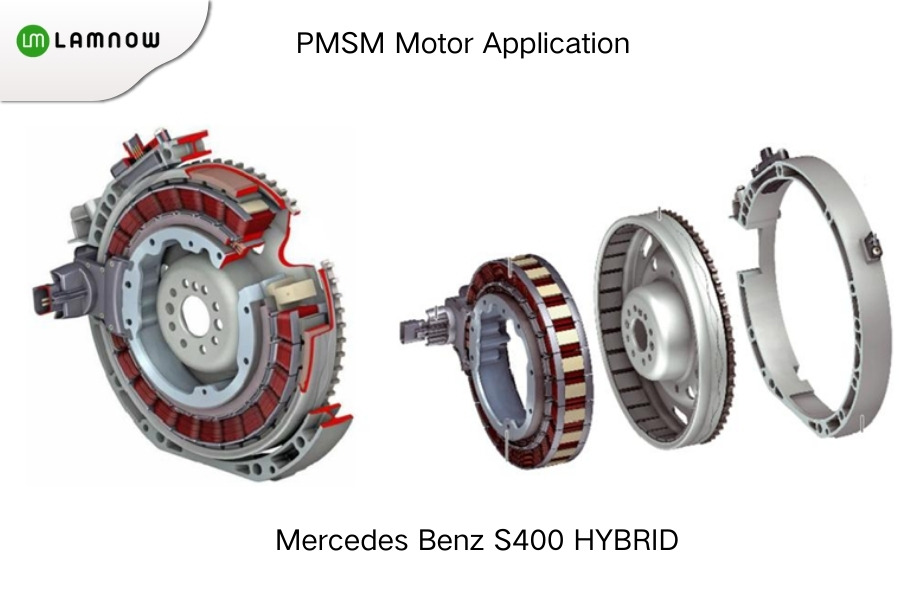
Internal-Type Permanent Magnet Synchronous Motor
Structure
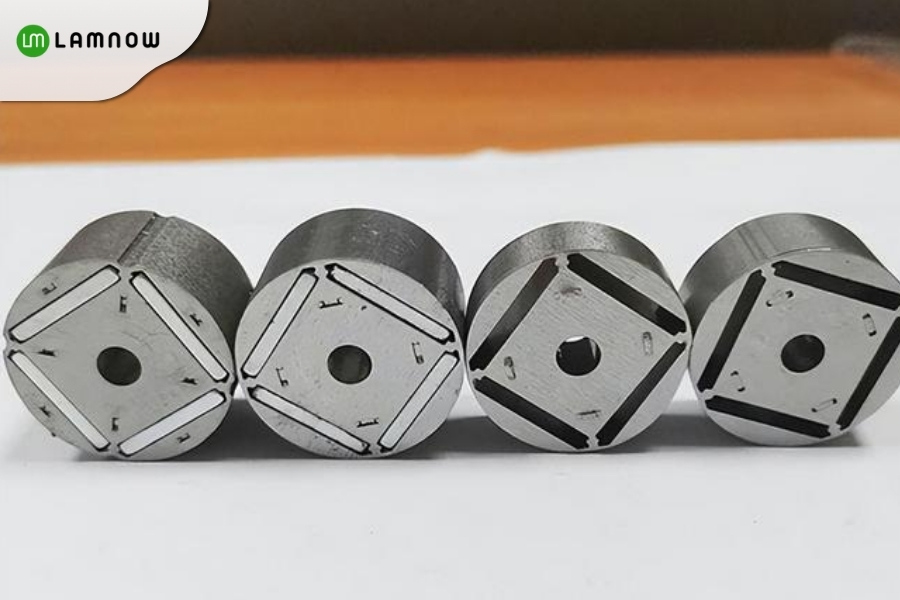
In internal-type PMSMs, the permanent magnets are located entirely inside the rotor core and do not directly contact the air gap. The surrounding rotor iron provides mechanical protection, improving structural strength and reliability, but also increasing manufacturing complexity.
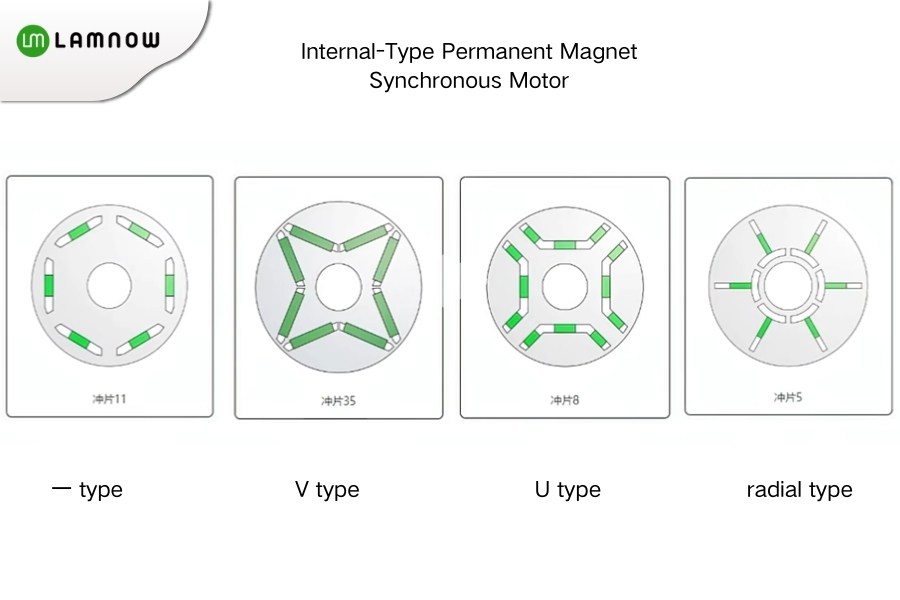
To reduce magnetic leakage, flux barriers are usually designed at the ends of the magnet slots. Nevertheless, magnetic leakage in internal-type PMSMs is generally more severe than in surface-mounted and interior-mounted structures.
radial-type
The radial-type structure is relatively simple, has a smaller leakage coefficient, high mechanical strength, and reliable operation, making it widely used. However, its magnet width is constrained by the rotor core, limiting design flexibility.
tangential-type
The tangential-type PMSM can generate higher magnetic flux using less magnet material due to flux concentration effects, which is particularly advantageous for motors with a large number of poles. However, due to end leakage flux, non-magnetic bearings are required, increasing manufacturing complexity and limiting practical applications.
hybrid-type PMSM
The hybrid-type PMSM combines the advantages of both radial and tangential structures. It efficiently utilizes rotor core space to accommodate more magnets and increase overall magnetic flux density while reducing leakage at the bottom of tangential structures. However, its structure and manufacturing process are complex, resulting in higher costs, and it is typically used in high-performance applications.
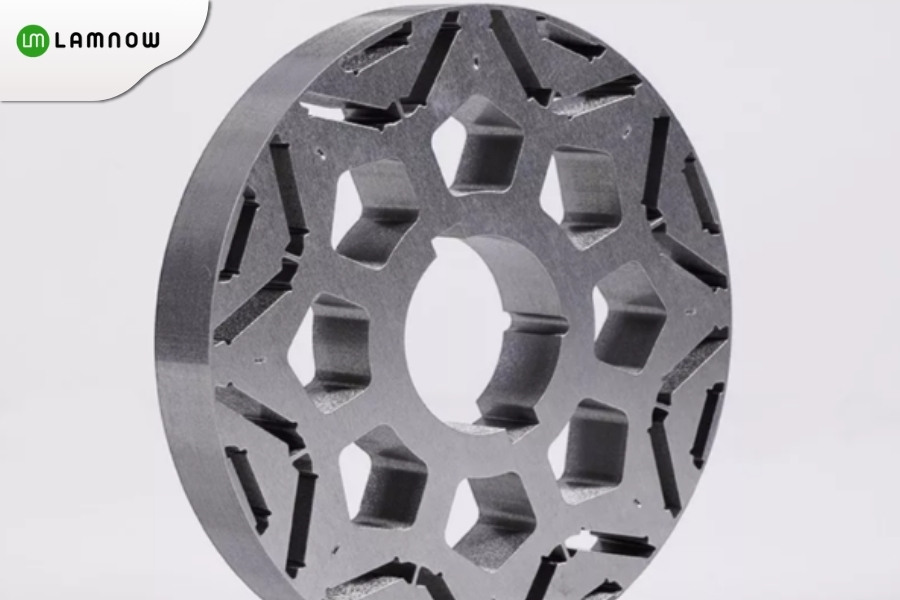
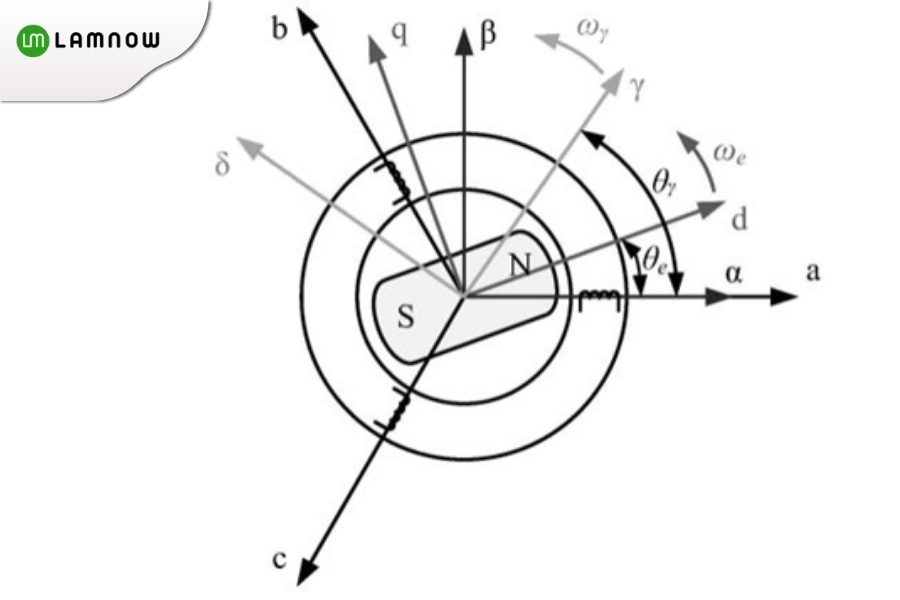
Compared with surface-mounted and interior-mounted PMSMs, internal-type PMSMs exhibit a larger difference between d-axis and q-axis inductances, resulting in the highest saliency ratio. Consequently, reluctance torque plays a more significant role. Moreover, since the magnets are farther from the air gap, field-weakening control is easier to implement, allowing for a wider speed range.
Application
In addition, the rotor iron covering the magnets provides magnetic shielding against stator harmonic fields, resulting in lower magnet eddy current loss and reduced temperature rise. Therefore, internal-type PMSMs are widely used in high-speed and high-frequency applications such as traction motors and textile machinery.
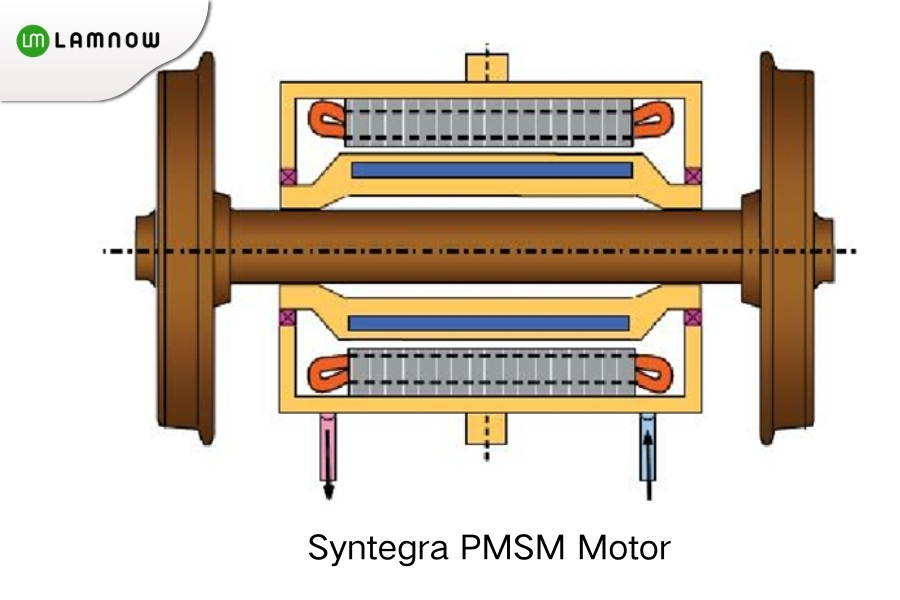
Siemens developed a direct-drive PMSM system for future urban rail vehicles under the Syntegra project. This system reduces noise by 15 dB, decreases volume by 30%, and improves efficiency by 3%. The fully enclosed direct-drive PMSM used in the Syntegra vehicle.
Outer-Rotor Permanent Magnet Synchronous Motor
Structure
The stator is located inside and consists of the stator core and windings. The rotor is located outside and includes permanent magnets, rotor core, and rotor housing.

Application
Outer-rotor PMSMs are primarily applied in flywheel energy storage systems. These motors operate at high speed in vacuum environments, where their structural design, operating conditions, and key technical challenges make them particularly suitable for flywheel applications.
Characteristics
- Simple structure: Outer-rotor motors are relatively simple in structure, making manufacturing and maintenance easier and reducing overall cost.
- Heat dissipation challenges: Due to high heat generation, effective cooling measures are required to ensure stable long-term operation.
- Control difficulty: Outer-rotor motors typically operate at lower speeds, increasing control complexity and often requiring advanced control strategies such as vector control or direct torque control.
Disc-Type Permanent Magnet Synchronous Motor
Disc-type motors feature a structure with a large radial dimension and a short axial length, making them suitable for applications with strict space constraints. Their planar air gap produces an axial magnetic field, so they are also referred to as axial-flux motors.
Structure
Disc-type PMSMs consist of stators, rotors, end covers, and support structures. Depending on magnet installation, they can be classified into surface-mounted and internal-type structures.

Application
In electric vehicles, disc motors can eliminate components such as gearboxes, clutches, differentials, and drive shafts, simplifying the drivetrain and reducing vehicle weight. This significantly improves energy efficiency and overall performance, promoting electric vehicle commercialization.

Linear Permanent Magnet Synchronous Motor
Flat-type PMS Linear Motor
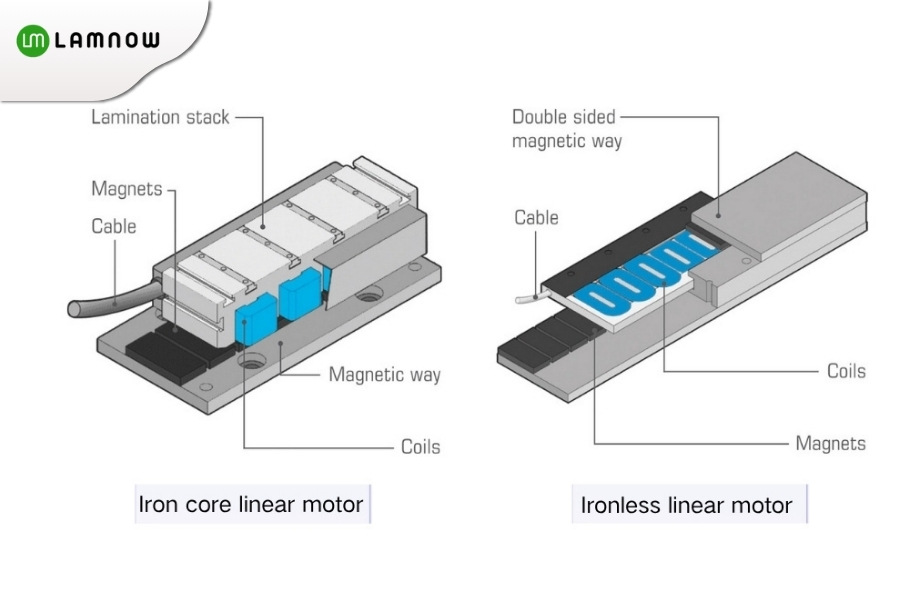
Provides large thrust and strong overload capacity, with natural cooling, commonly used for short-stroke applications.
U-type PMS Linear Motor
Features symmetrical structure without iron core, eliminating normal force and cogging force. Hall sensors are typically used, and it is widely applied in high-speed precision servo systems.
Flat-type, U-type, and tubular linear motors are widely used due to their simple structure, elimination of mechanical transmission components, and superior speed and acceleration performance compared with traditional drive systems.
How can selecting the right PMSM structure improve efficiency, torque performance, and reliability? Understanding magnet placement and application requirements is the key to choosing the most suitable permanent magnet synchronous motor.
PMSM Stator And Rotor Core – Choose Lamnow
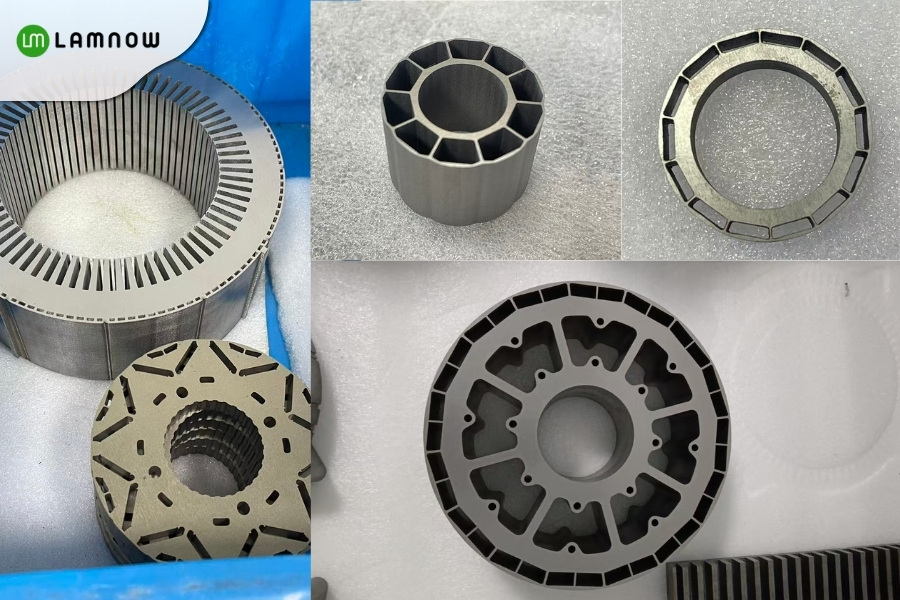
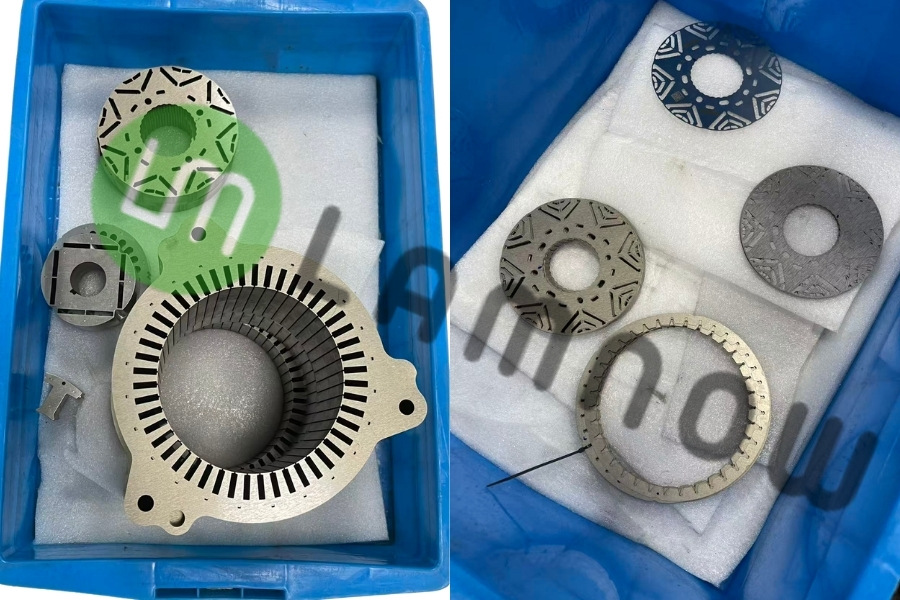
Looking for a reliable partner for PMSM stator and rotor cores? Lamnow specializes in electric motor laminations, offering laser cutting, wire EDM, compound stamping, progressive stamping, axial stamping, laser welding, and bonding processes. From prototypes to mass production, we support applications in new energy vehicles, hydrogen fuel cell blowers, flywheel energy storage systems, drones, and water pumps. Contact Lamnow to start your project.